
SeaLandAire has an extensive resume of projects that showcase our capabilities.
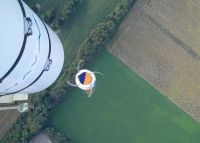 PHASE
PHASE
Precision High Altitude Sonobuoy Emplacement
Precision High Altitude Sonobuoy Emplacement (PHASE), is a current Phase II SBIR effort investigating sonobuoy hardware and software adaptations to facilitate highly accurate placement from high altitude launches. The …Continue reading →
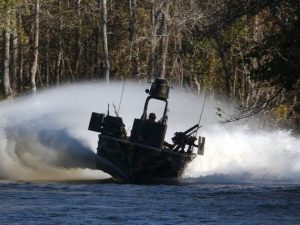 COMPACT RIVERINE AUV
Compact Riverine Autonomous Underwater Vehicle
SeaLandAire previously led in the development of a compact, lightweight (less than 20 lbs) Autonomous Underwater Vehicle (AUV) designed to map and report bathymetry and intrusive objects in a …Continue reading →
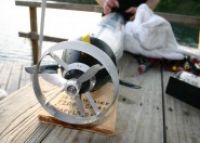 CMAS
CMAS
Commandable Mobile ASW Sensor Propulsion
SeaLandAire designed and build a full 6 Degree-of Freedom (DOF) propulsion and steering tail-cone assembly, navigation module with required software for a new A-size mobile training target. The propulsion …Continue reading →
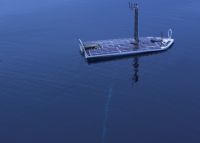 POS-SKB
Persistent Ocean Surveillance Station Keeping Buoy
SeaLandAire previously completed Phase I and Phase II contracts for Persistent Ocean Surveillance Station Keeping Buoy (POS-SKB) in response to DARPA BAA 04-33 Station-Keeping Energy Harvesting Sensors. The system was …Continue reading →
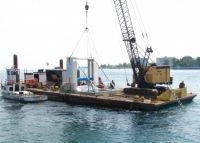 VIVACE
Large Scale Vortex Induced Vibration for Renewable Energy
SeaLandAire provided engineering support services to Vortex Hydro Energy to design, develop, and test a large scale renewable energy device based on the principle of vortex induced vibrations – …Continue reading →
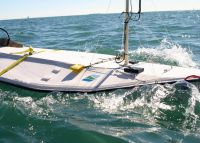 GATEKEEPER
Autonomous Surface Vehicle for Persistent Observation & Communication
The Gatekeeper was designed to provide a solution for an unmanned, long-life perimeter sensor fence at a known location. Because of the required long life capability, it was required …Continue reading →
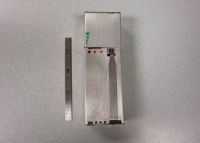 MDAR / MCIAS
Miniature Directional Acoustic Reciever & Miniature Commandable Impulsive Acoustic Source
The Miniature Directional Acoustic Receiver (MDAR) and Miniature Commandable Impulsive Acoustic Source (MCIAS)—affectionately termed ‘mini buoys’—are SeaLandAire’s response to saving volume and weight without sacrificing performance in anti-submarine warfare …Continue reading →
 CSP
CSP
Covert Sensor Package / Threat Spectrum Direction Finding Unit
Covert Sensor Package / Threat Spectrum Direction Finding Unit SeaLandAire developed a network of sensor nodes capable of detecting and localizing (direction) gunfire in contested environments. Two unique Unattended …Continue reading →
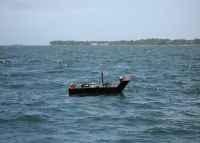 MARS
MARS
Moored Acoustic Reference System
Moored Acoustic Reference System The purpose of the SeaLandAire Moored Acoustic Reference System (MARS) is to monitor ambient noise and subsurface acoustic communication signals (underwater sounds). It consists of …Continue reading →